
No permits. No utility paperwork. No roof modifications. Plug-in solar systems start at $2,000 installed and let you generate your own power from day one. The simplest way to start saving on your electric bill.
Solar panels with a built-in microinverter that plug directly into a standard wall outlet. No electrician rewiring your panel. No permit applications. No waiting months for utility approval. Just clean energy flowing into your home.
Solar panels connect to a microinverter that plugs into any standard 120-volt outlet. The power feeds directly into your home wiring, offsetting what you pull from the grid. It works like any other appliance — except this one lowers your electric bill.
Under Utah HB 340, plug-in solar systems up to 1,200 watts need no building permits, no utility pre-approval, no interconnection agreements, and no HOA approval. The law passed unanimously — 72-0 in the House, 27-0 in the Senate.
A 1,200W system generates 2,100 to 2,800 kWh per year in Utah — roughly $300 to $400 off your annual electric bill. At $2,000 installed, payback is 5 to 7 years. Then it is free electricity for 20+ more years.
Whether you are solar-curious or solar-experienced, plug-in solar fits into your life without the commitment of a full rooftop system.
Not sure if solar is right for you? Plug-in solar is the lowest-risk way to find out. See real savings on your electric bill before committing to a full rooftop installation. Think of it as a test drive for solar energy.
If your rooftop system is maxed out or you want more generation without touching your existing setup, plug-in solar adds up to 1,200 watts through a completely separate system. No new permits, no utility amendments, no interconnection headaches. Just more power.
Utah law protects your right to install plug-in solar. Your HOA cannot block it. Your landlord cannot block it. And because the system plugs into an outlet, you can take it with you when you move.
Full rooftop solar costs $16,000+. Plug-in solar starts at $2,000 installed. If you want to start cutting your electric bill without a major investment, this is the most affordable path to generating your own electricity.
In March 2025, Governor Spencer Cox signed HB 340 — the Solar Power Amendments bill — making Utah the first state in the country to legalize plug-in solar. The bill passed unanimously with full bipartisan support.
Under this law, any UL-certified solar system up to 1,200 watts that plugs into a standard 120-volt outlet is classified as a "Portable Solar Generation Device." That classification means:
As of March 2026, 29 other states have introduced similar legislation. Utah led the way — and BYOP Electric is here to help you take advantage of it.

The EcoFlow STREAM series is purpose-built for the US market — UL 1741 certified, designed for 120V/60Hz, and fully compliant with Utah HB 340.
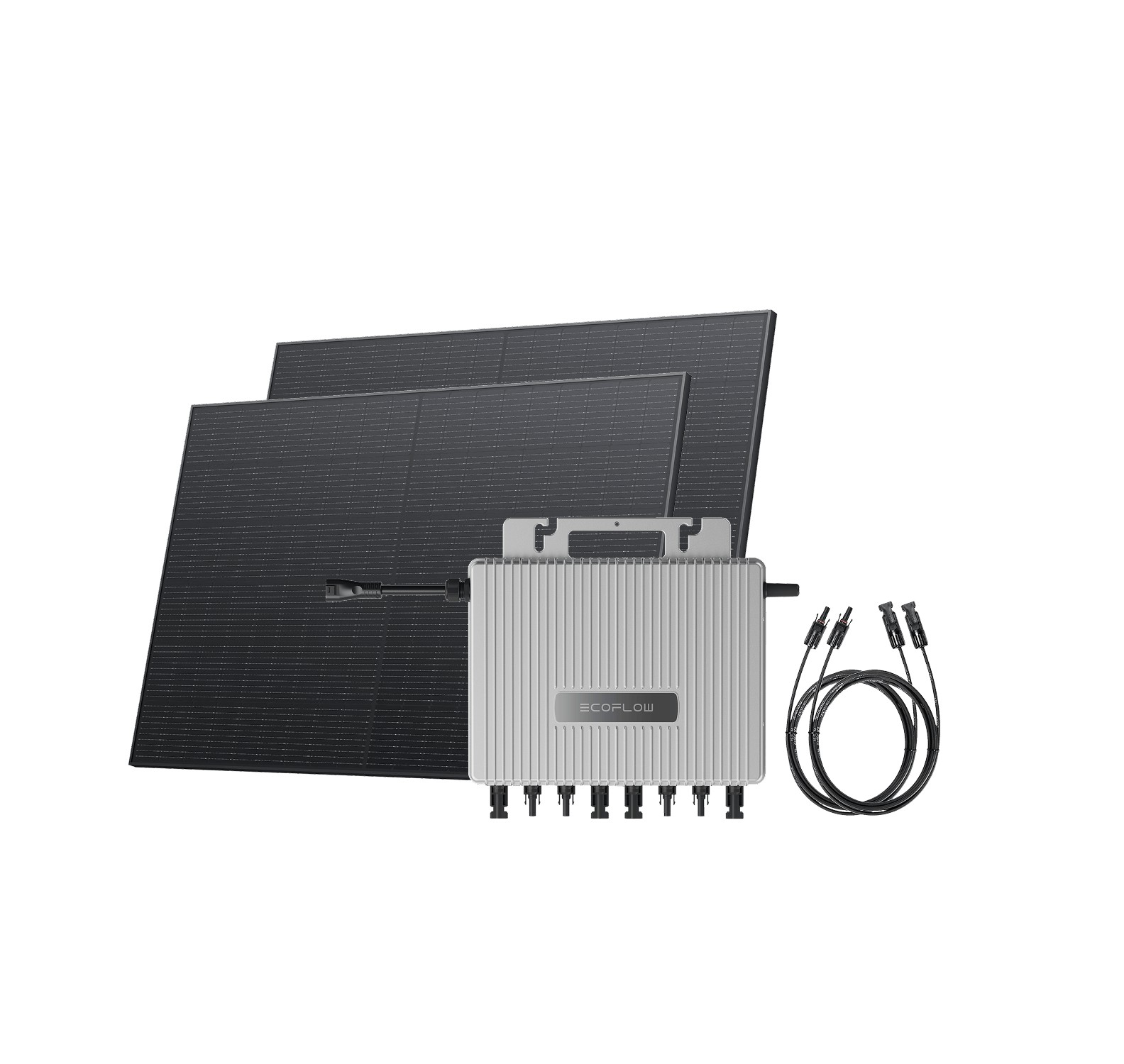
The brain of the system. A 1,200-watt grid-tied microinverter with 3 MPPTs and 4 solar panel inputs. It converts solar DC power to household AC and feeds it directly through a standard wall outlet into your home wiring.
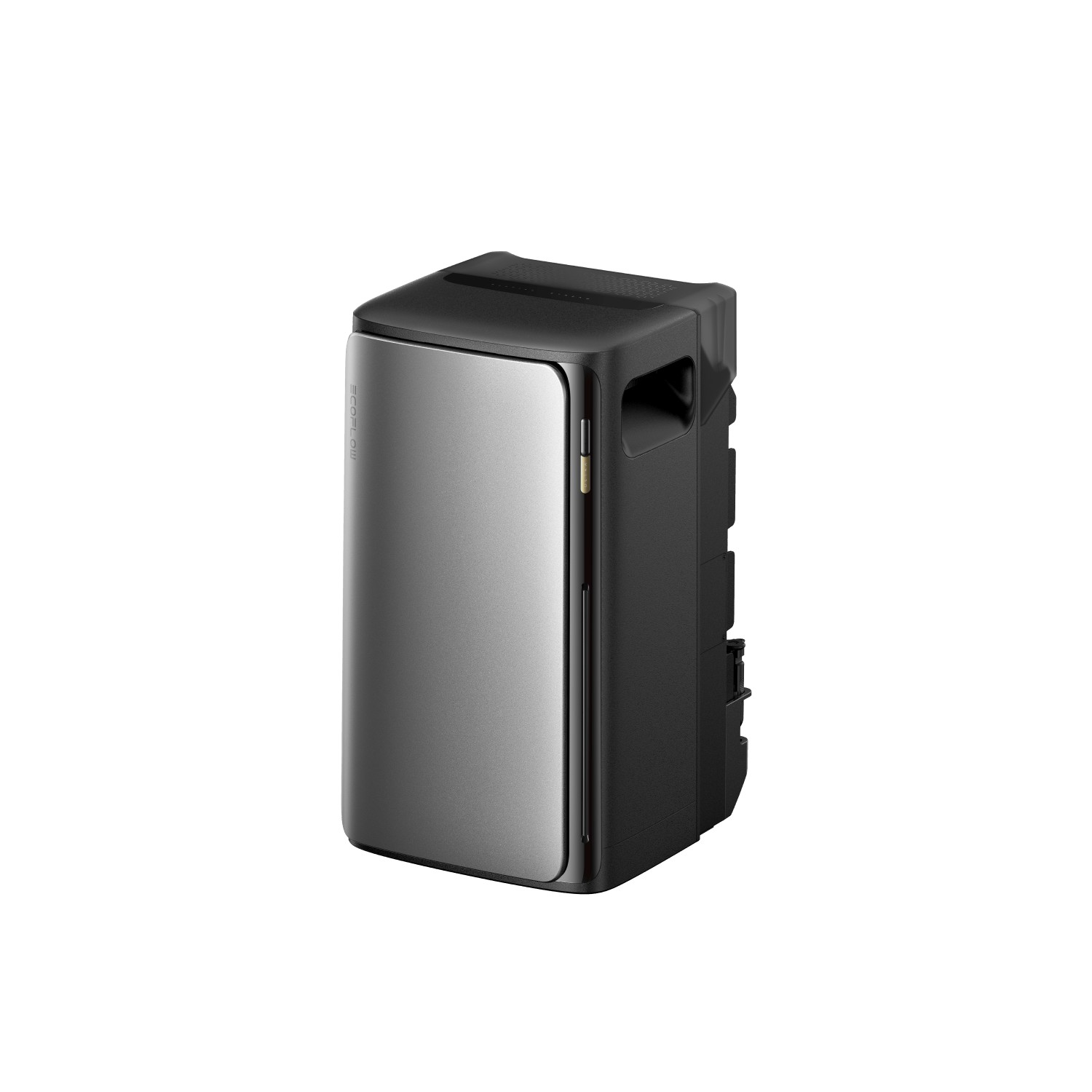
Want to use your solar power at night? The STREAM Ultra adds a built-in 1.92 kWh LFP battery that stores excess daytime generation. It also acts as a smart inverter, managing when to use solar, battery, or grid power based on AI optimization.
Different tools for different situations. Here is how they compare.
| Feature | Plug-In Solar | Traditional Rooftop |
|---|---|---|
| Starting cost | $2,000 | $16,000+ |
| Permits required | None | Building + electrical + utility |
| Installation time | Same day | 4-8 weeks (including permits) |
| System size | Up to 1,200W | 3,000W – 15,000W+ |
| Bill offset | 15 – 30% | 80 – 100%+ |
| Payback period | 5 – 7 years | ~10 years |
| Portable | Yes — take it when you move | No — stays with the house |
| HOA approval | Not required (HB 340) | May be required |
| Works for renters | Yes | No |
Plug-in solar is not a replacement for rooftop solar — it is a complement or a starting point. Many customers start with plug-in solar, see the savings, and later invest in a full rooftop system.
From phone call to generating power — here is what the process looks like when BYOP Electric installs your plug-in solar system.
We discuss your electricity usage, goals, and property layout. We recommend the right system size and configuration — panels only, or panels plus battery storage.
We check your property for optimal panel placement — south-facing walls, patios, balconies, or ground mounts. We verify your outlet and circuit can safely handle the system.
We mount the panels, connect them to the microinverter, plug it in, and configure the EcoFlow app on your phone. Most installations are completed in a few hours — not days or weeks.
Your system starts producing power immediately. No waiting for permit approvals. No waiting for utility interconnection. You watch the watts flow in real time on the app.
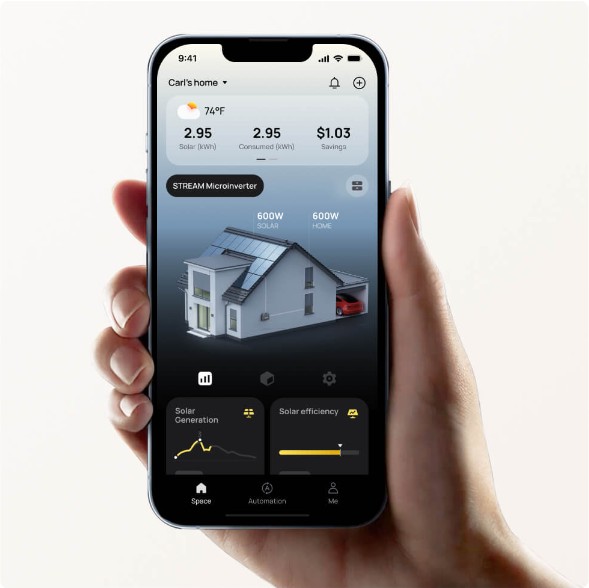
The EcoFlow app gives you real-time visibility into your solar production, battery charge level, and energy savings. Watch your system generate power, see exactly how much you are saving, and control everything from your phone.
Every system we install meets the safety requirements specified in Utah HB 340 and national electrical standards.
The system automatically shuts off during a grid outage. This protects utility workers who may be repairing power lines. It happens in milliseconds — no action required from you.
The EcoFlow STREAM microinverter carries UL 1741 certification — the US standard for grid-connected inverters. This means it has been independently tested and verified for electrical safety.
The system monitors the electrical circuit it is connected to. If combined load approaches unsafe levels, it throttles output or disconnects to prevent circuit overload.
Straight answers to common questions. If yours is not listed, call or text us at (385) 284-7904.
Yes. Utah House Bill 340 was signed into law in March 2025 and took effect May 7, 2025. It created a legal category called "Portable Solar Generation Device" for UL-certified systems up to 1,200 watts that plug into a standard 120-volt outlet. No permits, no utility pre-approval, and no interconnection agreements are required. Utah was the first state in the country to legalize plug-in solar.
A 1,200W system in Utah generates approximately 2,100 to 2,800 kWh per year, translating to roughly $300 to $400 in annual electricity savings depending on your rate and sun exposure. At $2,000 installed, most systems pay for themselves in 5 to 7 years and continue saving you money for 25+ years.
While plug-in solar is designed to be simple, professional installation ensures optimal panel placement for maximum sun exposure, secure mounting that withstands Utah weather, correct circuit selection to avoid overloading, and verified grounding for safety. We also configure the app, optimize system settings, and make sure everything is producing at peak efficiency from day one.
Absolutely. Plug-in solar operates as a completely separate system from your rooftop panels. It does not require any modification to your existing setup — no new permits, no utility amendments, no interconnection changes. It is the simplest way to add more generation to a home that already has solar.
Plug-in solar systems in Utah are not eligible for net metering. The power you generate is consumed by your home in real time. Smart features in the EcoFlow STREAM can throttle output to match your consumption, so you use every watt. If you add a STREAM Ultra battery, excess daytime power is stored for nighttime use.
Without a battery, no. All grid-tied plug-in solar systems shut off during outages to protect utility workers — this is a required safety feature. With the EcoFlow STREAM Ultra, you can power devices directly from the battery's built-in AC outlets during an outage, but it will not power your home through the wall wiring.
No. Utah HB 340 explicitly protects plug-in solar systems up to 1,200 watts from HOA and landlord restrictions. They cannot require approval, ban the system, or impose unreasonable restrictions on portable solar devices that connect through standard outlets.
A 1,200W system typically uses 2 to 4 solar panels depending on panel wattage. That is roughly 40 to 80 square feet of space. Panels can be mounted on a south-facing wall, patio, balcony railing, ground frame in the yard, or a flat section of roof. We will find the best spot during our site visit.
It depends on your goals. Without a battery, you only use solar power when the sun is shining — evenings and nights rely entirely on the grid. With the EcoFlow STREAM Ultra battery, excess daytime solar is stored and used at night, which means more of your solar generation actually offsets your bill. The battery also gives you emergency backup power from its built-in outlets. If you want to maximize savings, the battery is worth the upgrade.
Plug-in solar installed by a licensed electrician. Starting at $2,000. No permits, no hassle, no pressure.