Natural-gas or propane standby generators — Generac, Kohler, Cummins, Briggs. Automatic transfer switch, full permit, inspection, and commissioning. Installed by a licensed Master Electrician. If your house has a well, an aging bench-line, or a winter storm coming, this is the backup that actually carries you through.
Batteries fit most homes. But for some — rural acreage, multi-day outages, well pumps, or whole-home AC — a generator is still the right tool. Here's when.
Batteries run hours to days. A standby generator runs as long as fuel flows. For rural homes, winter storms, or anywhere grid restoration can take 3+ days, a generator is the only reliable answer.
Running multiple AC units, a well pump, a workshop, or a medical facility draws more continuous power than most battery systems can deliver without stacking many batteries. A generator handles it with one unit.
Off the RMP Wattsmart program, outside HOA noise restrictions, or simply away from neighbors who'd mind generator noise. For properties where batteries make less economic sense, a generator is the right tool.
The best configuration for serious resilience: battery handles daily grid support and short outages silently; generator kicks on for multi-day events. Best of both worlds.
We install and service every major standby generator brand. We'll recommend the size and brand that fits your home, your fuel source, and your budget — not the one with the best dealer margin.
A generator too small won't carry your loads. A generator too large wastes money and fuel. We calculate the exact size based on your electrical panel, essential loads, and peak demand.
| Size | Covers | Installed Cost |
|---|---|---|
| 14 kW | Critical loads (fridge, furnace, lights, one AC) | $10,000 - $13,000 |
| 18 kW | Mid-size home, full kitchen + 1-2 ACs | $12,000 - $16,000 |
| 22 kW | Whole-home (most common) | $14,000 - $19,000 |
| 26-30 kW | Large home, multiple HVAC zones, well + shop | $18,000 - $25,000 |
Pricing includes generator, concrete pad, fuel line (up to 50 ft), ATS, permits, and commissioning. Longer runs and larger service upgrades cost more.
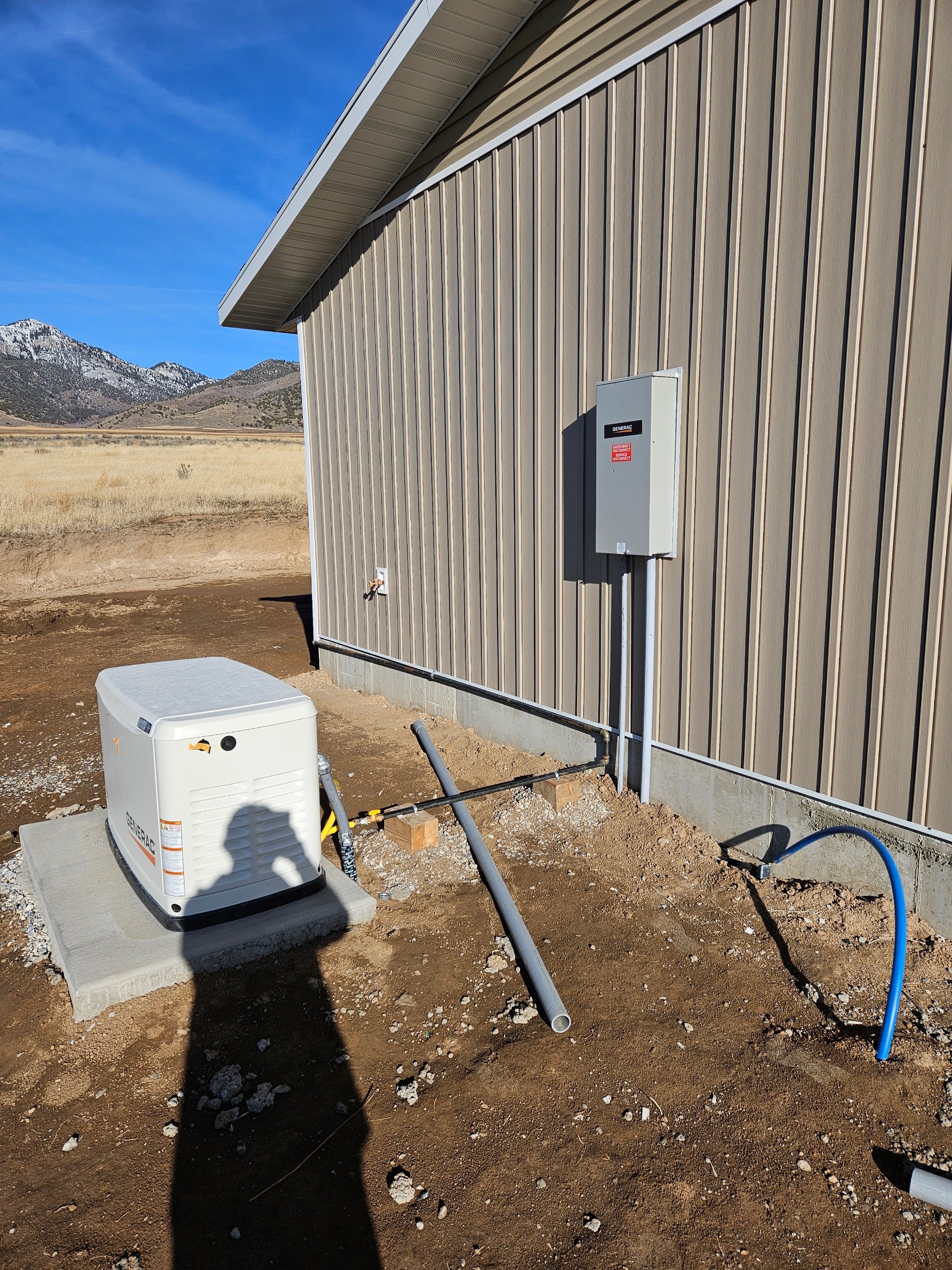
Industry leader. Widest range of sizes. Best parts availability. Mobile Link remote monitoring app. 5-year standard warranty.
Premium build quality. Quieter operation than most Generac units. 5-year warranty standard, 10-year option available.
Heavy-duty. Preferred for large homes and commercial. Best for long-duration continuous operation. 5-year warranty.
Strong value option. Smaller residential sizes. PowerProtect series for budget-conscious whole-home.
Entry-level whole-home. Good fit for critical-loads and smaller homes on a budget.
Don't care who installed your generator — we repair, maintain, and replace units from every brand.
Most Utah homes have natural gas, which makes it the default. But propane has its place.
Best for: homes already on a gas meter.
Best for: rural homes without NG service, cabins, or homes with insufficient gas pressure.
We also service generators we didn't install. If your generator won't start, throws an error code, or hasn't been maintained, we can help.
Standby generator installs are more involved than batteries. Here's exactly what happens.
We discuss your goals (whole-home vs critical loads), fuel type, and site conditions. You get an honest answer on whether a generator or battery is the right tool for you.
We measure gas pressure, evaluate panel capacity, verify setback distances from doors/windows (code requires 5+ feet), plan the concrete pad and conduit runs.
We calculate the exact generator size from your load data and give you a firm quote broken down line-by-line. You see every cost.
We file electrical, mechanical (gas), and building permits. Generator lead time is currently 3-6 weeks depending on size — we'll give you the real timeline.
Pad poured and cured (3-5 days). Gas or propane line trenched and pressure-tested. Conduit run from generator to panel.
Generator set on the pad, anchored, connected. Automatic transfer switch installed next to main panel. All wiring pulled and landed.
Electrical and gas inspections. We simulate a grid outage to verify switchover, run-under-load, and transfer-back behavior. App is configured. You're done.
If your question isn't here, call or text (385) 283-7904.
A fully installed 22 kW whole-home generator runs roughly $14,000-$19,000 depending on fuel type, distance from fuel source, concrete pad requirements, and ATS location. Smaller 14-18 kW units start around $10,000-$13,000. Larger 26-30 kW units run $18,000-$25,000. Pricing includes the unit, concrete pad, fuel line, ATS, permits, and commissioning.
Natural gas is better if your home already has a gas meter — unlimited runtime, no fuel delivery, lower operating cost. Propane makes sense for rural homes without gas service, cabins, or properties where NG pressure is insufficient for generator loads. We evaluate gas pressure and supply capacity during site survey and recommend the right fuel.
Physical installation is typically 2-3 days (concrete pad cure adds another 3-5 days). Full timeline from signed contract to a running generator is usually 4-8 weeks, mostly for permits, utility/gas coordination, and equipment lead time. Generator inventory in Utah has been tight since 2024 — we'll tell you the current lead time when quoting.
A whole-home generator (typically 22 kW+) powers everything in your house including AC and heat pumps through an automatic transfer switch (ATS). A critical-loads generator (12-18 kW) connects to a sub-panel wired only to essentials — fridge, furnace, internet, lights. Critical-loads setups are cheaper and require less gas/propane supply but won't run your AC.
Yes. Standby generators run a weekly self-test cycle automatically, but they also need annual service (oil, filters, spark plugs, battery check). We offer maintenance plans for generators we install and most other brands. Skipped maintenance is the #1 reason generators fail to start during an outage.
Yes. We service generators from all major brands (Generac, Kohler, Cummins, Briggs, Champion) regardless of who installed them. Most "won't start" issues are battery, fuel supply, or controller problems that can be diagnosed same-day. Call (385) 283-7904.
Yes — this is a great hybrid setup. The battery handles short outages silently and automatically, and the generator kicks on only for extended outages (24+ hours) to recharge the battery. FranklinWH, Sol-Ark, and newer Tesla Powerwall configurations support this natively. It's the best of both worlds: silent daily operation plus unlimited runtime when you need it.
Modern units are 60-75 dB at 20 feet — roughly the volume of a vacuum cleaner or an air conditioner. Kohler tends to be quietest, Cummins heaviest-duty-but-louder. For HOA-sensitive neighborhoods, we can add a sound-reducing enclosure. Still louder than a battery (which is silent), so we'll discuss both if noise matters.
No federal or state rebates currently exist for residential generators in Utah. Occasionally manufacturers run rebate promotions — we'll pass any active promos on to you in quoting. Battery systems still qualify for the $2,000 Wattsmart rebate from Rocky Mountain Power.
No salespeople. No inflated pricing. Just a licensed Master Electrician telling you exactly what your generator will cost — and whether you actually need one.